
Practical guidesfor real websites.
Turning rough content, PDFs, domains, and one-page ideas into websites people actually use.
Every guide.
Newest first. Pick a topic to narrow it down.
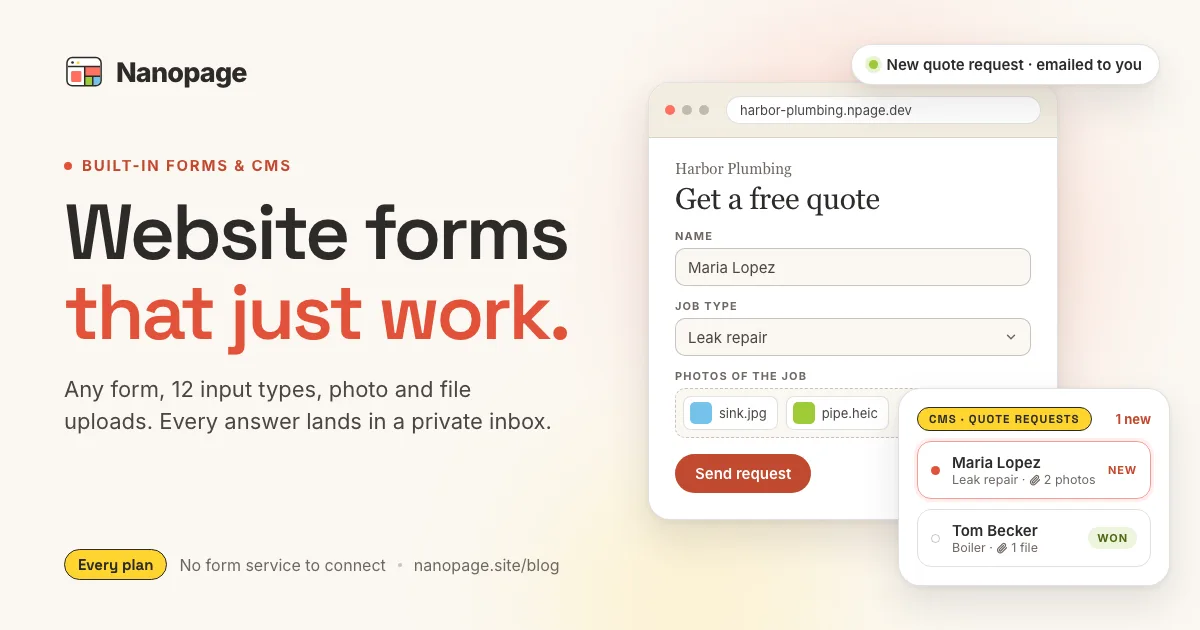
Website Forms That Just Work: Enquiries, Registrations, Applications, and File Uploads
Nanopage builds forms into every site: quote requests, registrations, job applications, client intake, reviews, signups, or anything custom. Use 12 input types, including photo and document uploads, with every submission in a private inbox with email alerts, spam handling, and CSV export.
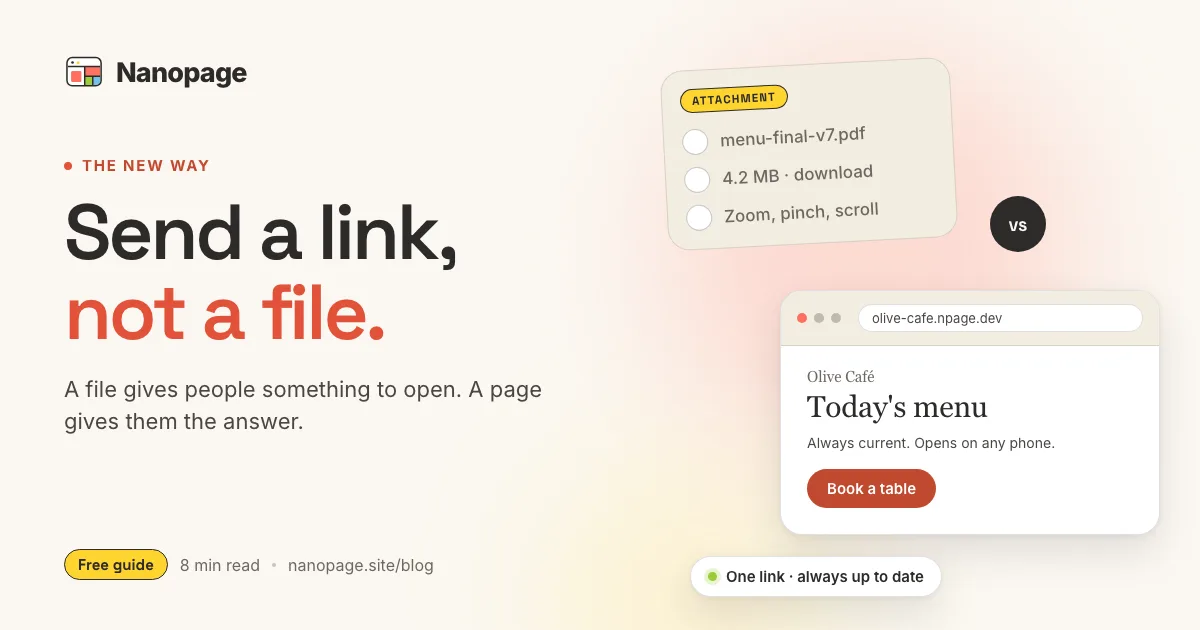
A URL Is the New File Attachment
A file gives someone something to open. A web page gives them the answer. Here is when to share a URL instead of attaching a PDF, deck, menu, resume, or guide.
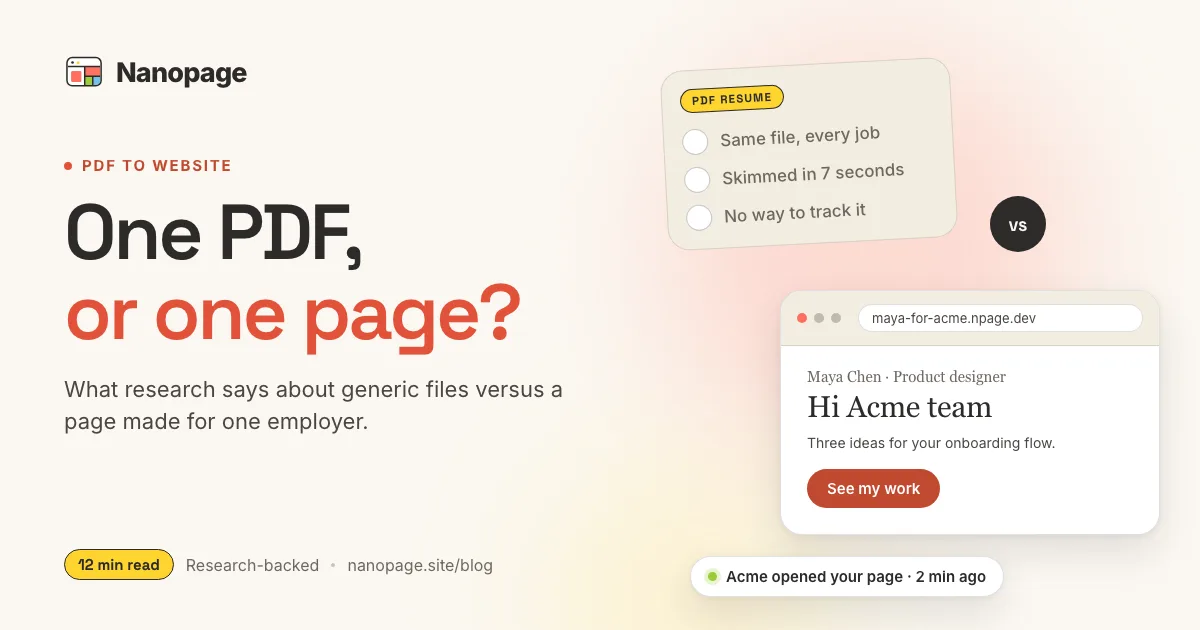
PDF Resume vs Company-Specific Application Website: What Improves Your Odds
Research-backed comparison of sending a PDF resume versus a page dedicated to one employer. When each format wins, what personalization data actually shows, and how to combine both.
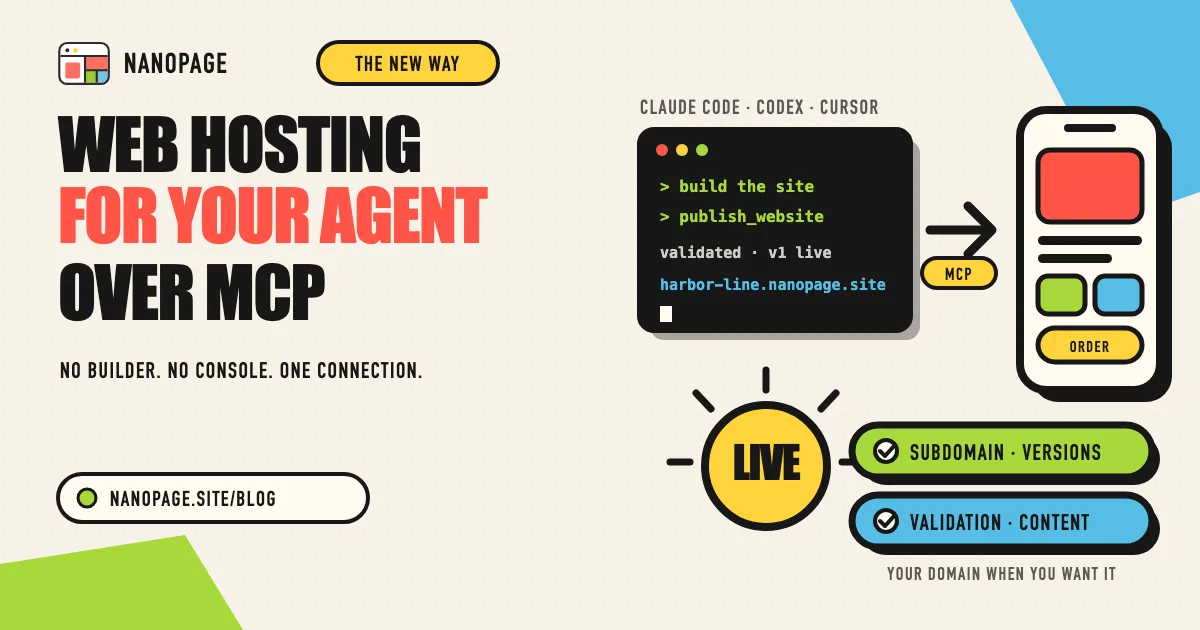
Web Hosting for Your Agent
Nanopage is a full AI website builder, but you never have to open it. Connect any MCP client such as Claude Code, Codex, or Cursor, and your agent gets hosting, a live subdomain, versioning, validation, and dynamic content without you building any of it.
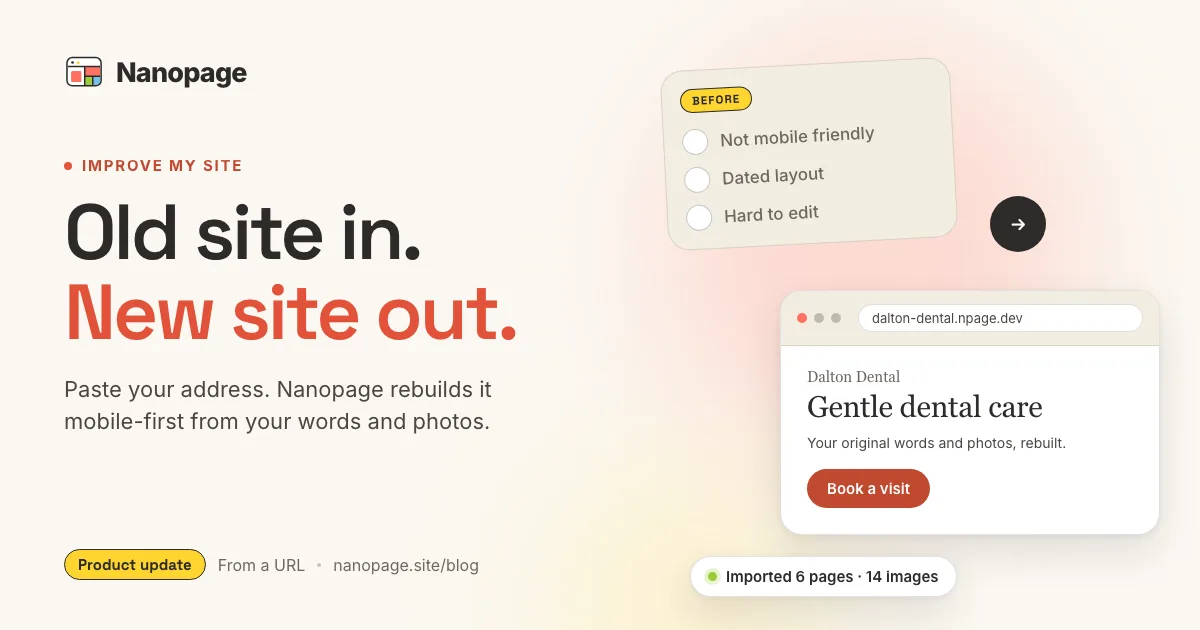
Improve My Site: Turn Your Outdated Website Into a Modern One From Its URL
Paste the address of your current website and Nanopage imports the words, pages, and real images, then rebuilds it as a fresh, mobile-first site you can update yourself. No developer, no rewrite, no hosting bill.
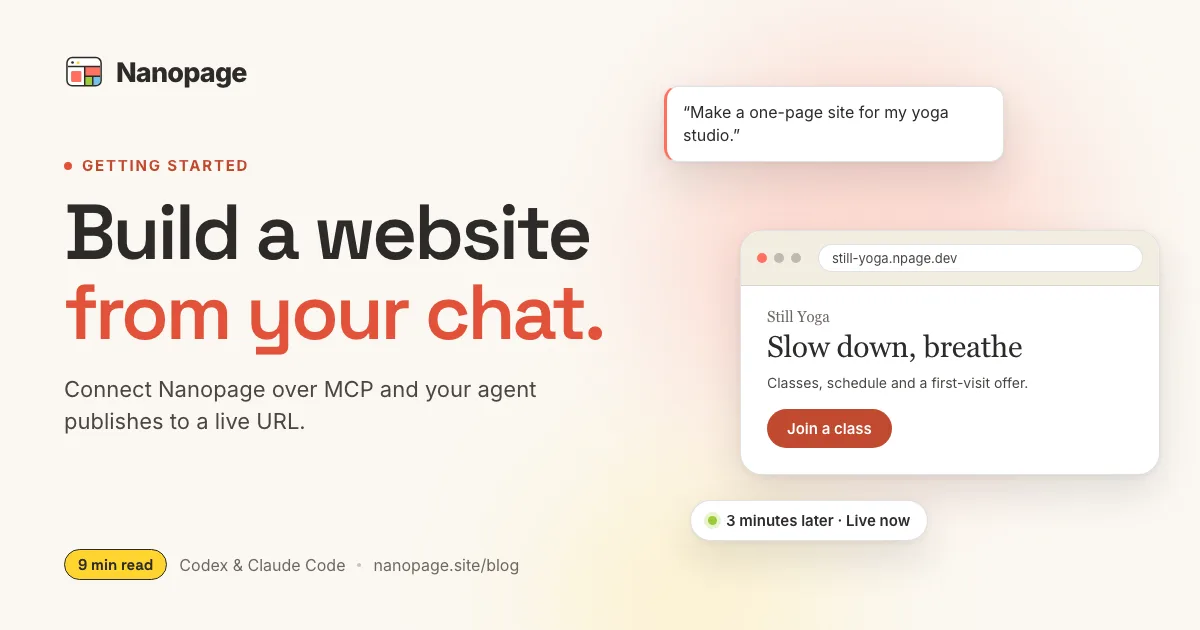
How to Build a Website with ChatGPT Codex or Claude Code
Codex now lives inside the ChatGPT app. Connect Nanopage to it over MCP and your agent can build a website and publish it to a live URL without ever leaving the conversation.
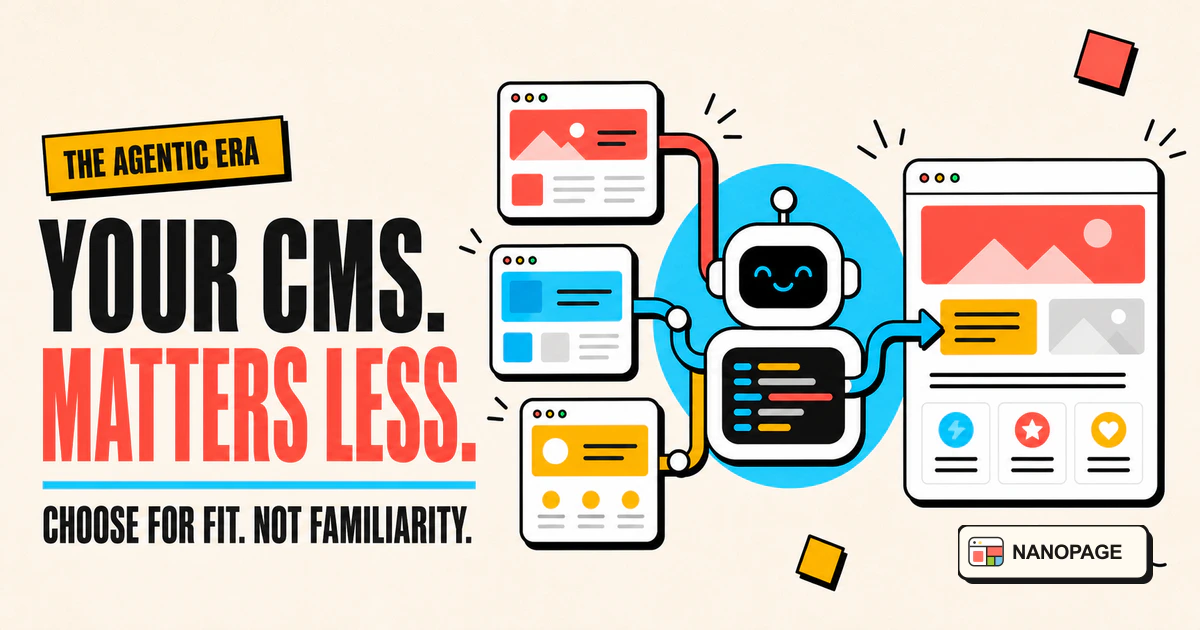
Your CMS Matters Less in the Age of AI Agents
Organizations once chose WordPress, Drupal, and other established CMSs partly because skilled help was easy to find. AI coding agents change that calculation: familiarity matters less, while access, portability, security, and operability matter more.
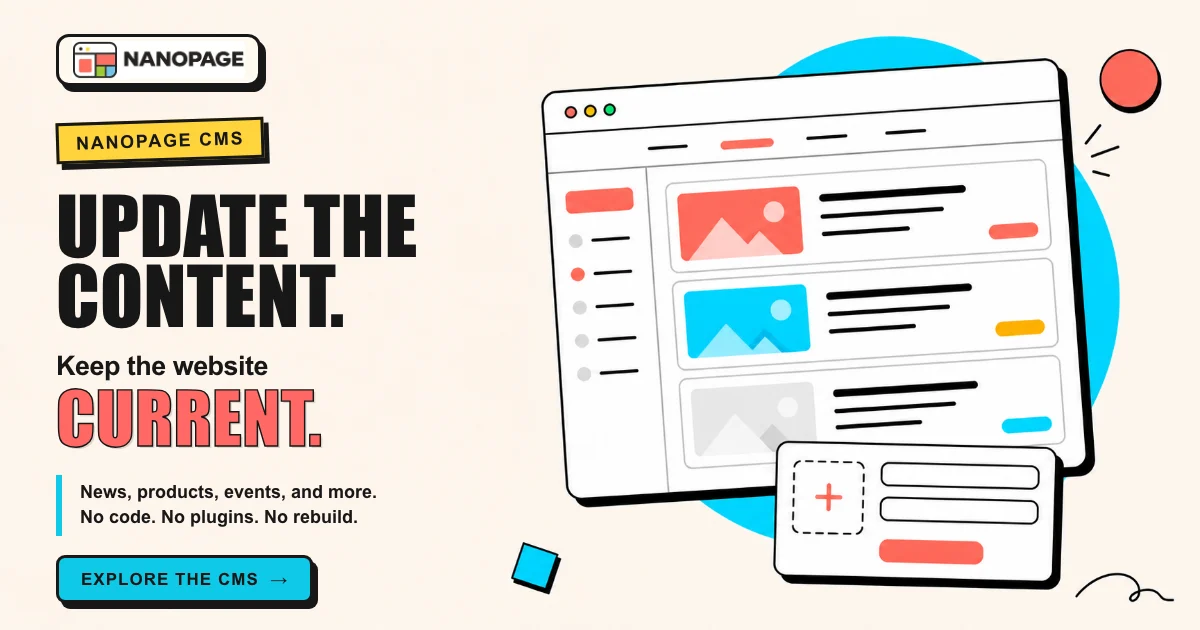
Nanopage CMS: Keep Your Website Current Without Rebuilding It
Nanopage now includes a simple CMS for news, blogs, products, events, FAQs, testimonials, listings, galleries, and forms. Set up the design once, then update structured content without code, plugins, or an AI site change.
A Tradesperson Website That Makes the Phone Ring: Tap-to-Call, Service Area, and Proof
A practical plumber, electrician, and HVAC website checklist: tap-to-call, services, service area, license and insurance, job photos, emergency hours, local SEO, and a mobile call test.
How to Make Your Small Business Website Easy for AI Assistants to Understand
A practical AI search visibility checklist for small businesses: publish clear services, locations, prices, FAQs, proof, and structured data that people and search tools can understand.
Password-Protected Pages: Share a Website With Only the People You Choose
Nanopage sites can now sit behind a shared password. Visitors enter one password before the page loads, so you can put documents, PDFs, client work, deal material, and internal pages on a real web page instead of emailing attachments around.
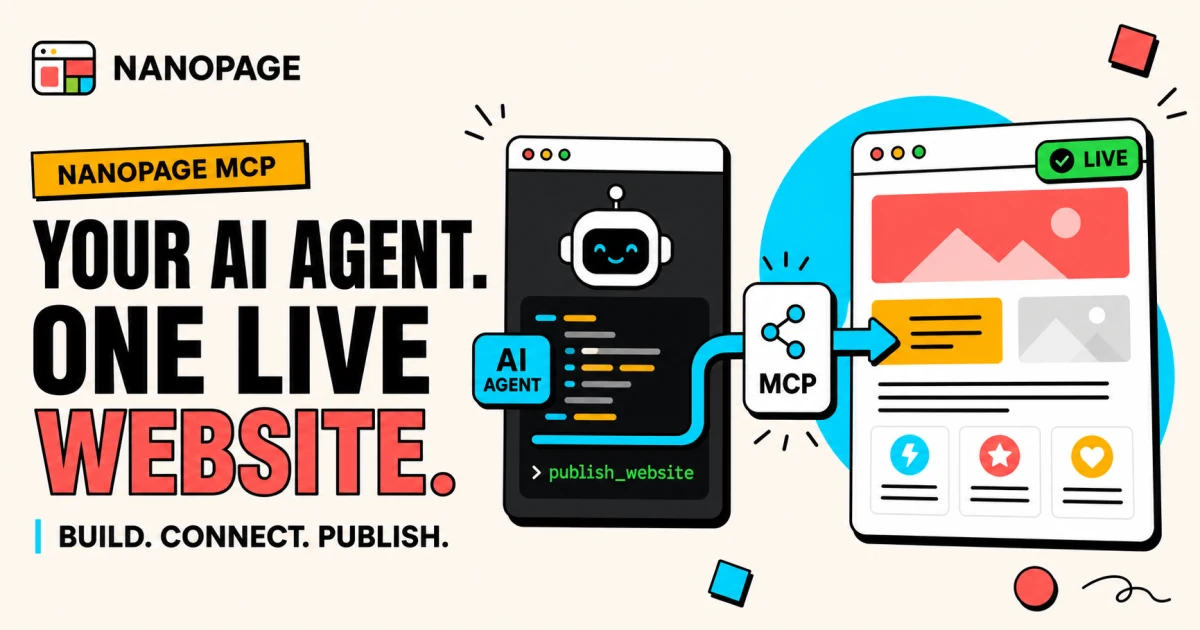
Nanopage Now Has an MCP Server for AI Coding Agents
Connect Claude Code, Claude Desktop, Cursor, or Codex to Nanopage and let your AI coding agent publish static websites directly to a live Nanopage URL.
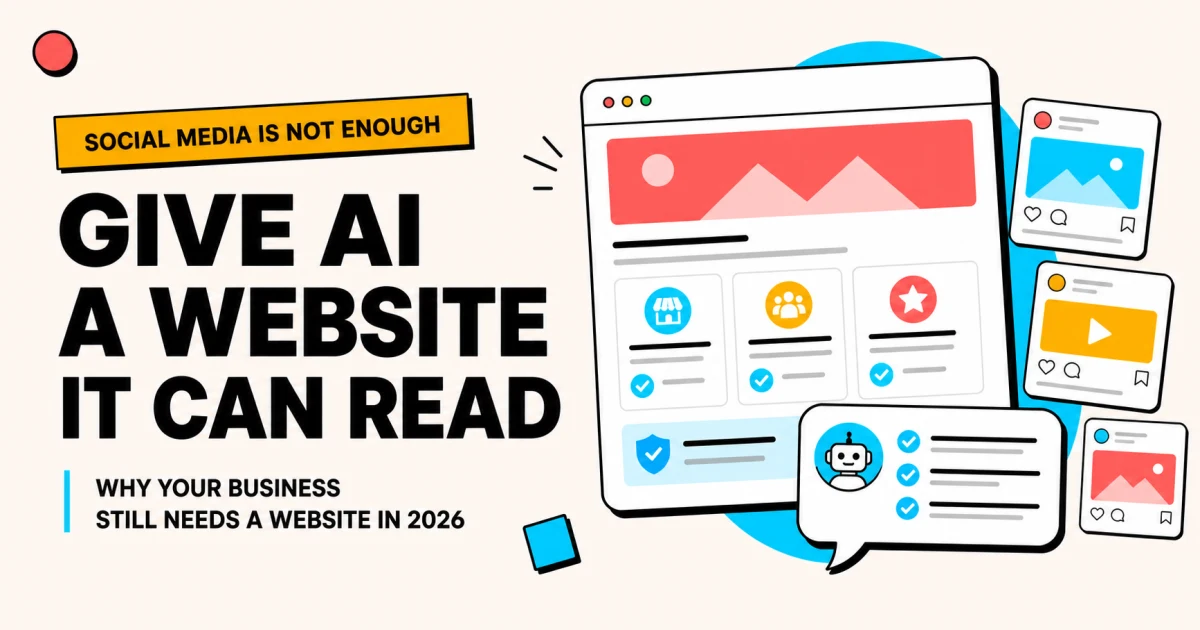
Social Media Is Not Enough: Why Your Business Still Needs a Website in 2026
Social media can introduce your business, but AI assistants often see only fragments. Learn why a crawlable website is the strongest source you control for being found, understood, and recommended in 2026.
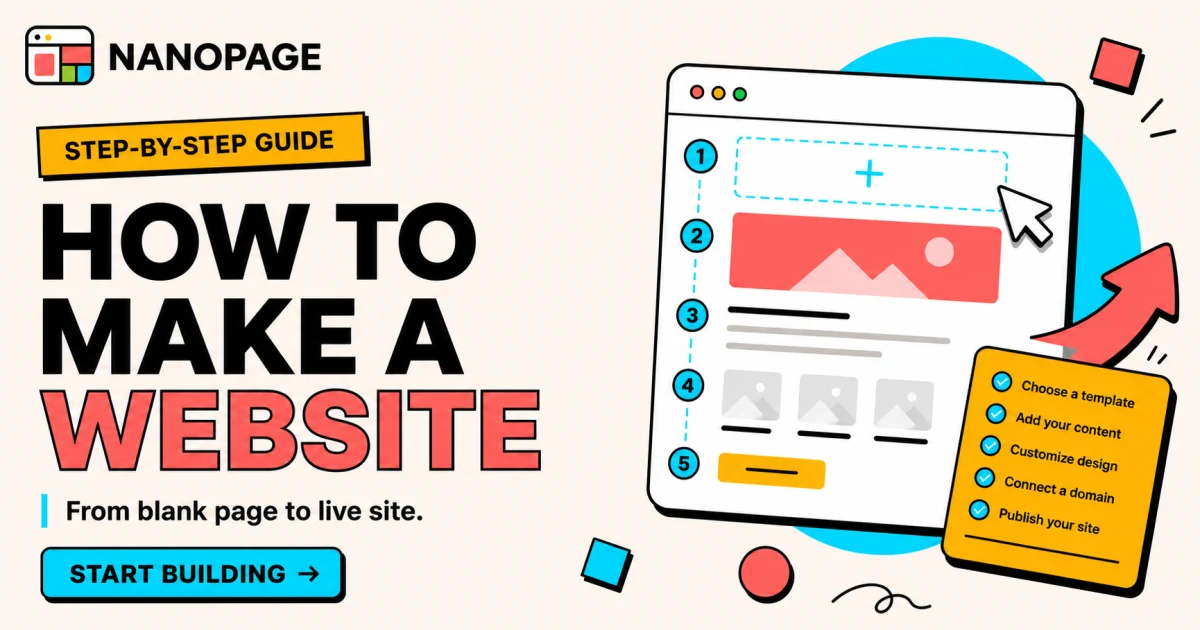
How to Make a Website: A Step-by-Step Guide
Learn how to make a website from start to finish: choose a goal, plan the content, pick a building method, design the page, connect a domain, test, and publish.
Vibe Coding a Website: A Non-Technical Guide
Vibe coding is not just for developers. Learn how ordinary people can use Nanopage to turn a plain-language idea, business details, a resume, or a few files into a real hosted website.
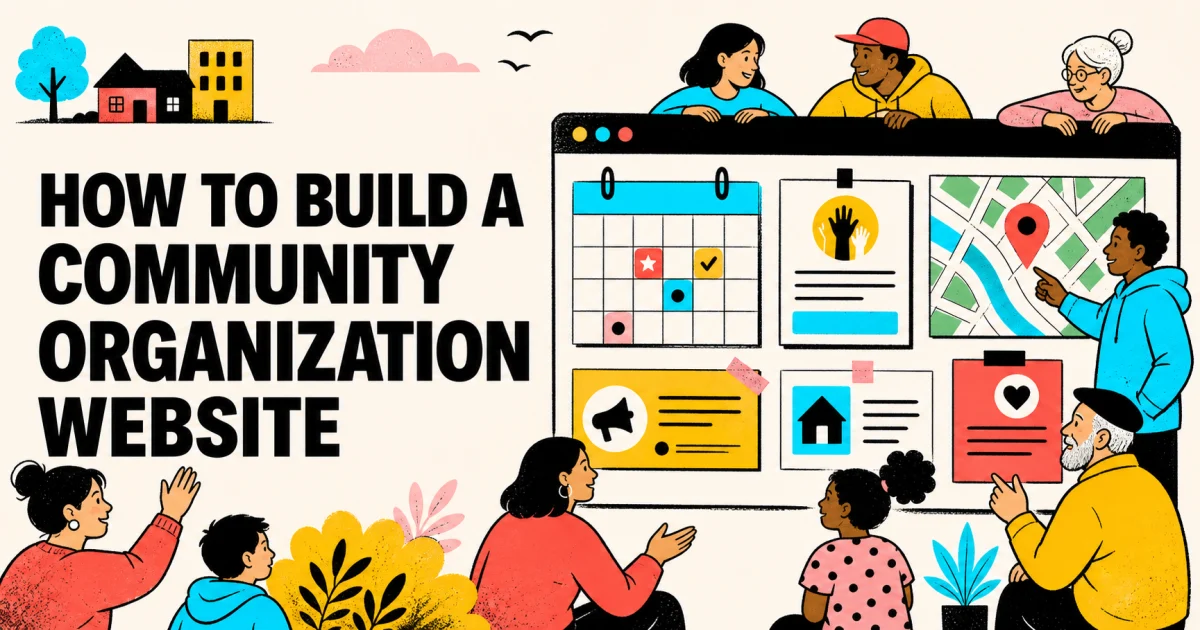
How to Build a Community Organization Website for Events, Volunteers, and Local Updates
A practical guide to building a community organization website with current events, useful local information, specific volunteer roles, membership details, public documents, and a simple update process.
Header, Hero, Footer: Every Part of a Website Explained in Plain English
A plain-English guide to website sections and elements: header, hero, navigation, CTA, cards, testimonials, footer, and more. Learn what each part is called so you can ask an AI website builder for exactly the change you want.
Real Estate Listing Page Checklist: Photos, Specs, CTA, and Local SEO
A practical real estate listing page checklist covering hero photos, beds/baths/sqft, map, open house details, agent CTA, schema-friendly structure, and how to launch from a PDF brochure in one sitting.
Websites Are Now a Commodity: Anyone Can Have One Right Away
A website used to be a project you hired for. Now it is closer to a utility: describe what you need, publish in minutes, and skip the developer or agency. Here is what that shift means for small businesses.
Linktree Alternative: Build a Real Link-in-Bio Website That Can Rank
Linktree is fine for a stack of buttons. If you want a custom domain, no platform branding, and a page Google can actually index, build a real link-in-bio website instead. Here is when to switch and what to include.
Can a One-Page AI Website Rank on Google? An SEO Checklist for One-Page Sites
One-page websites can rank on Google for the searches that actually matter to a small business: your name, your service plus your town, and the questions your customers ask. Here is what a single page can and cannot rank for, and a practical SEO checklist.
How to Update Your Website by Just Asking
Launching a website used to be the easy part; changing it later was the trap. With a conversational website builder, updates work like messages: say what changed, review the result, publish. Here is how the editing loop works and how to ask for changes that come back right.
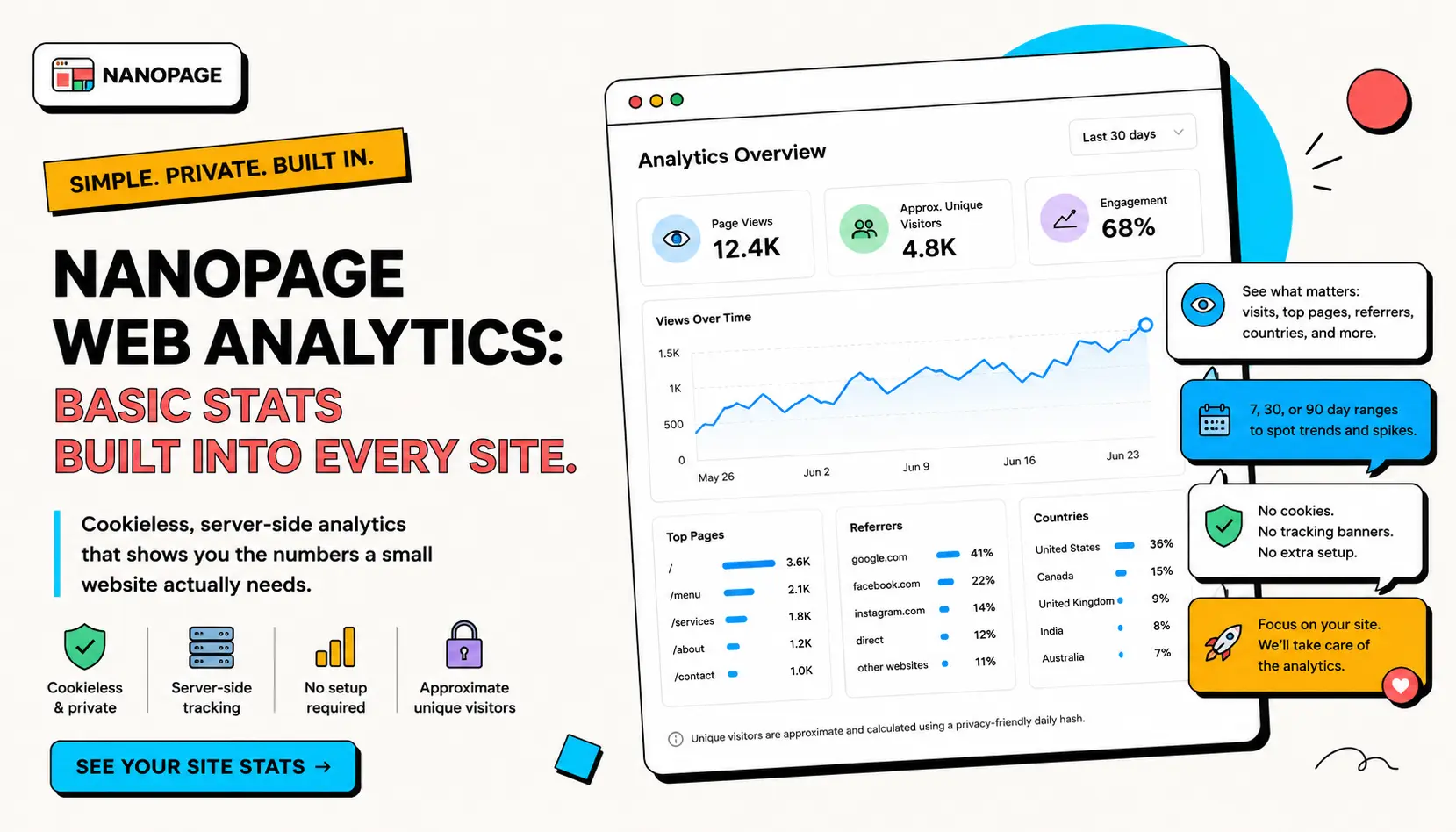
Nanopage Web Analytics: Basic Stats Built Into Every Site
Every Nanopage site includes simple, cookieless web analytics by default: page views, approximate unique visitors, top pages, referrers, countries, and 7, 30, or 90 day views. It is basic on purpose, which is exactly what most small websites need.
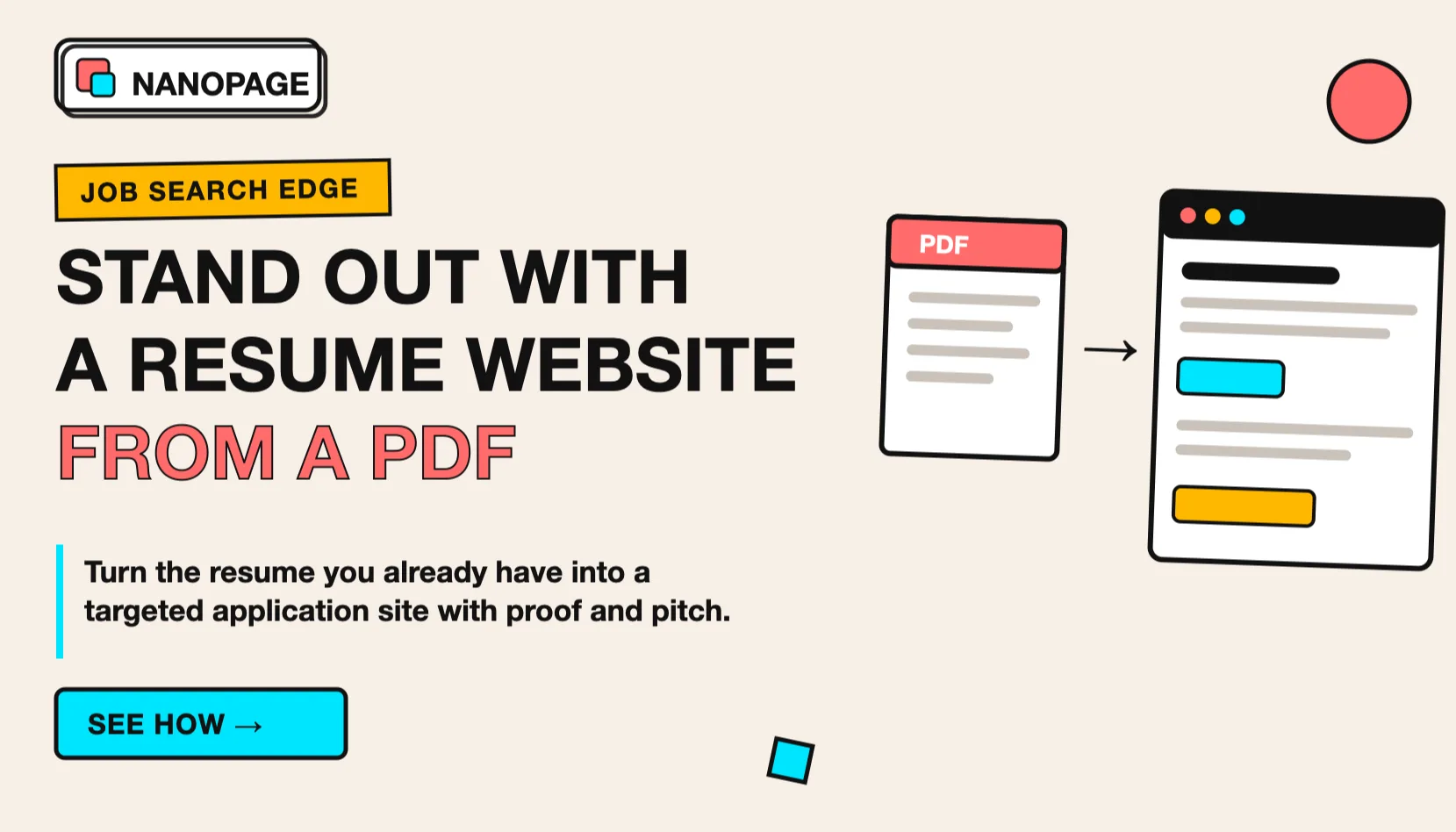
How to Stand Out With a Resume Website From a PDF
A practical guide for job seekers who want to stand out by turning a PDF resume into a targeted application website with a cover letter, proof, and role-specific pitch.
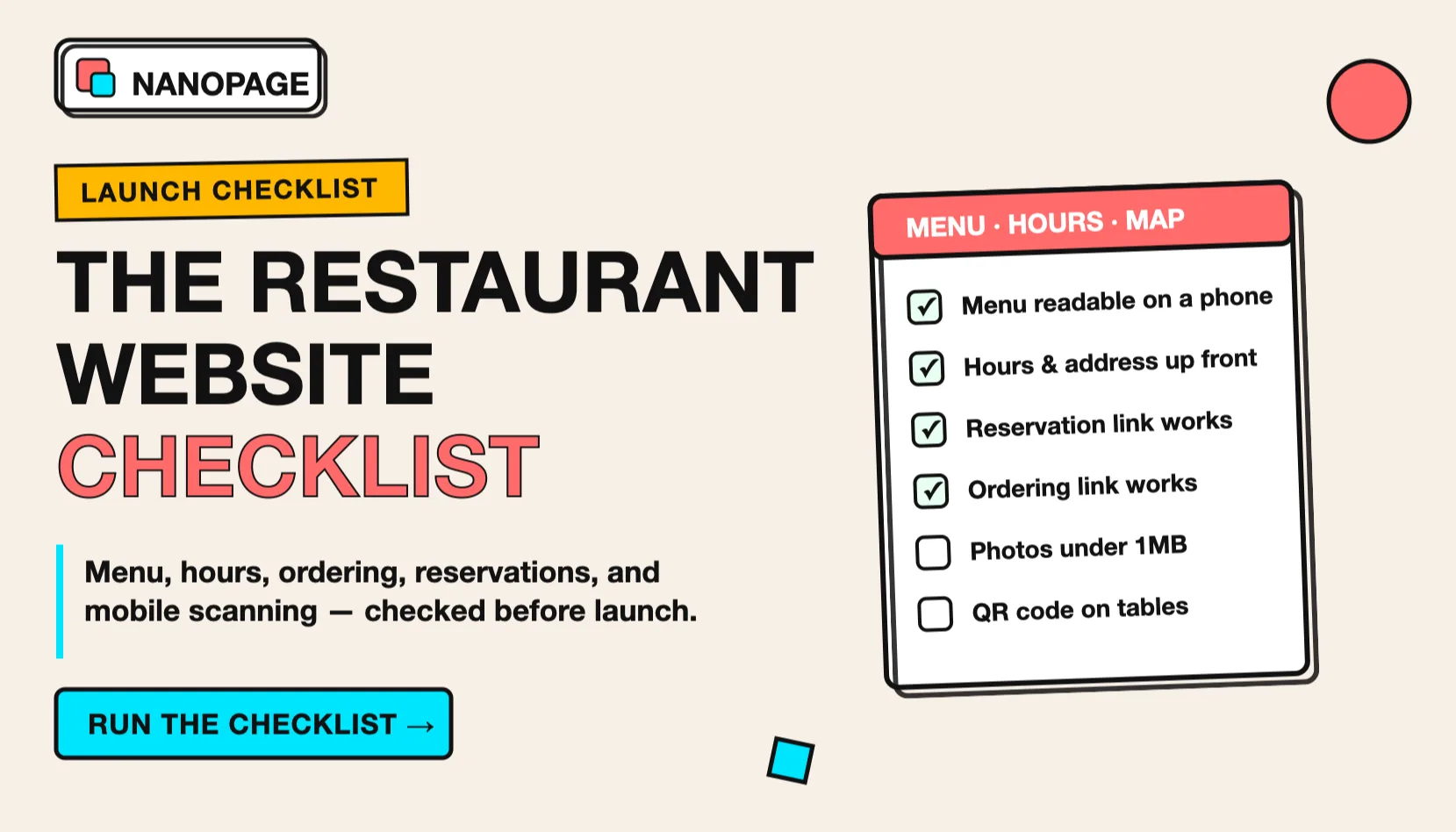
Restaurant Website Checklist: Menu, Hours, Ordering, Reservations, and Mobile Scanning
A practical restaurant website checklist covering menus, hours, location, reservations, ordering links, photos, accessibility, mobile scanning, PDFs, and launch checks.
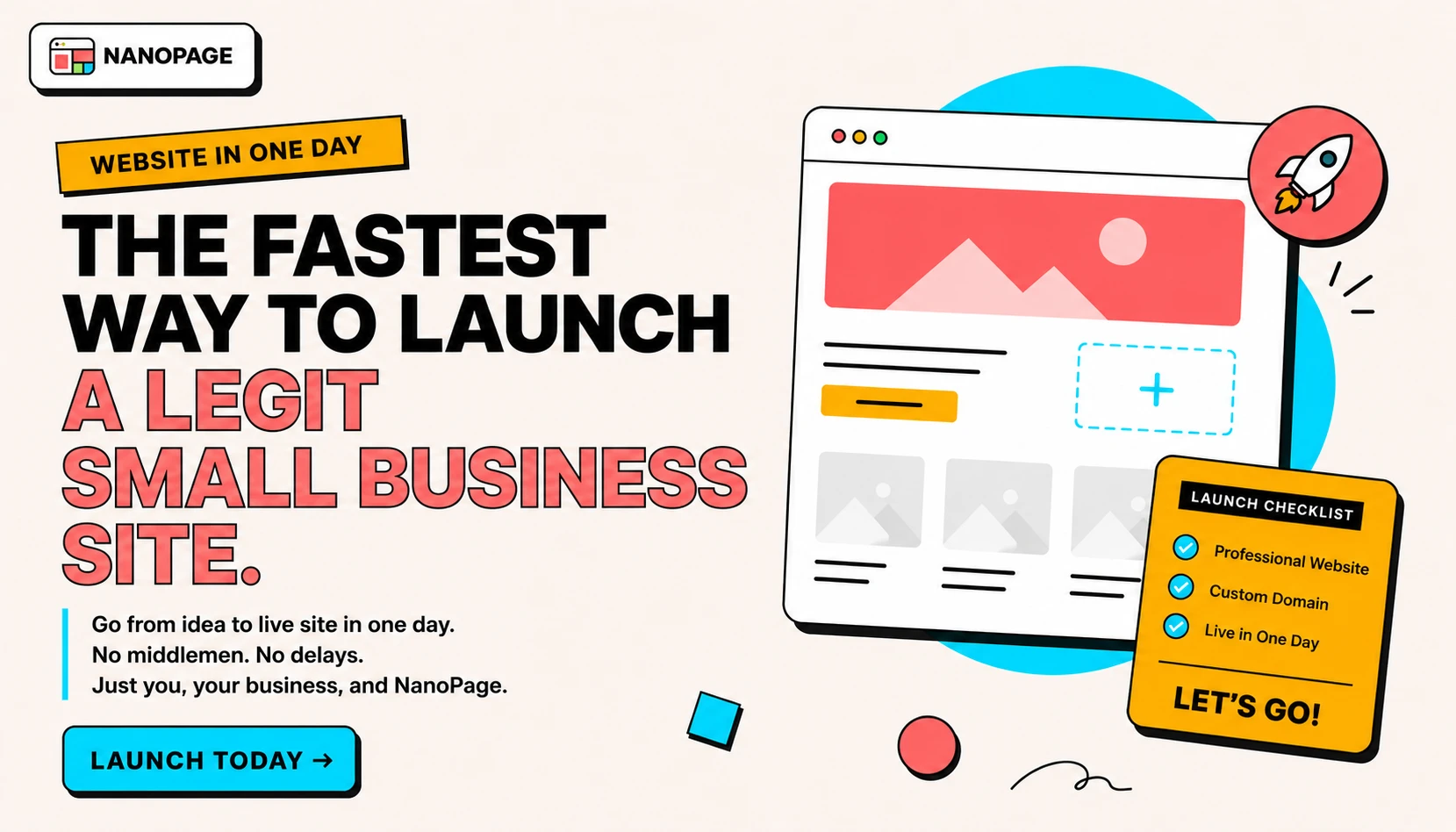
Website in One Day: The Fastest Way to Launch a Legit Small Business Site
A practical one-day launch plan for small business websites: what to prepare, what to skip, how to structure the page, and how to publish without getting trapped in weeks of revisions.
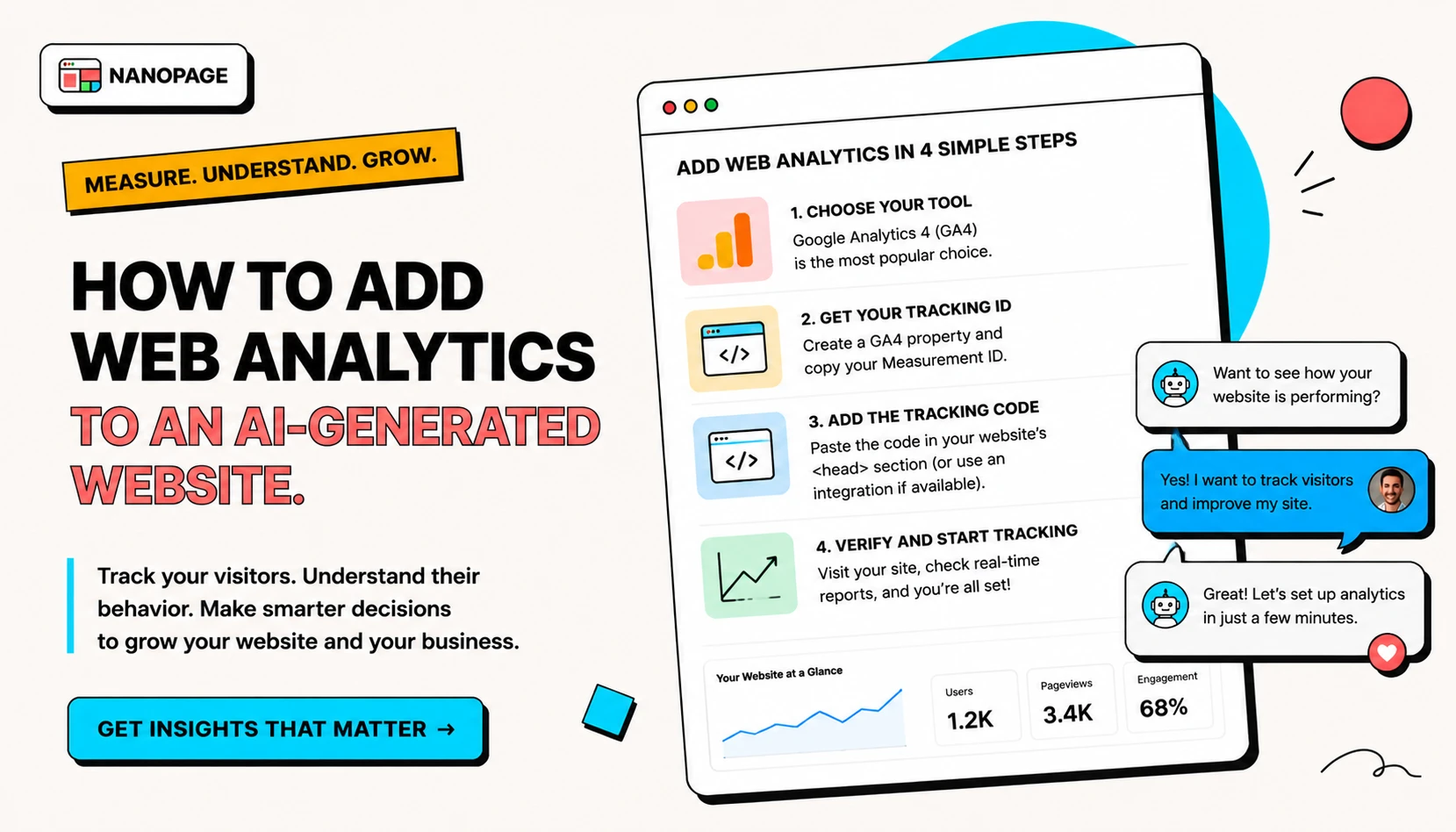
How to Add Advanced Web Analytics to an AI-Generated Website
Nanopage includes basic built-in analytics for every site. If you need advanced tracking, here is how to add Plausible, Google Analytics, Fathom, Umami, or another provider by copying the tracking code and asking AI to install it.
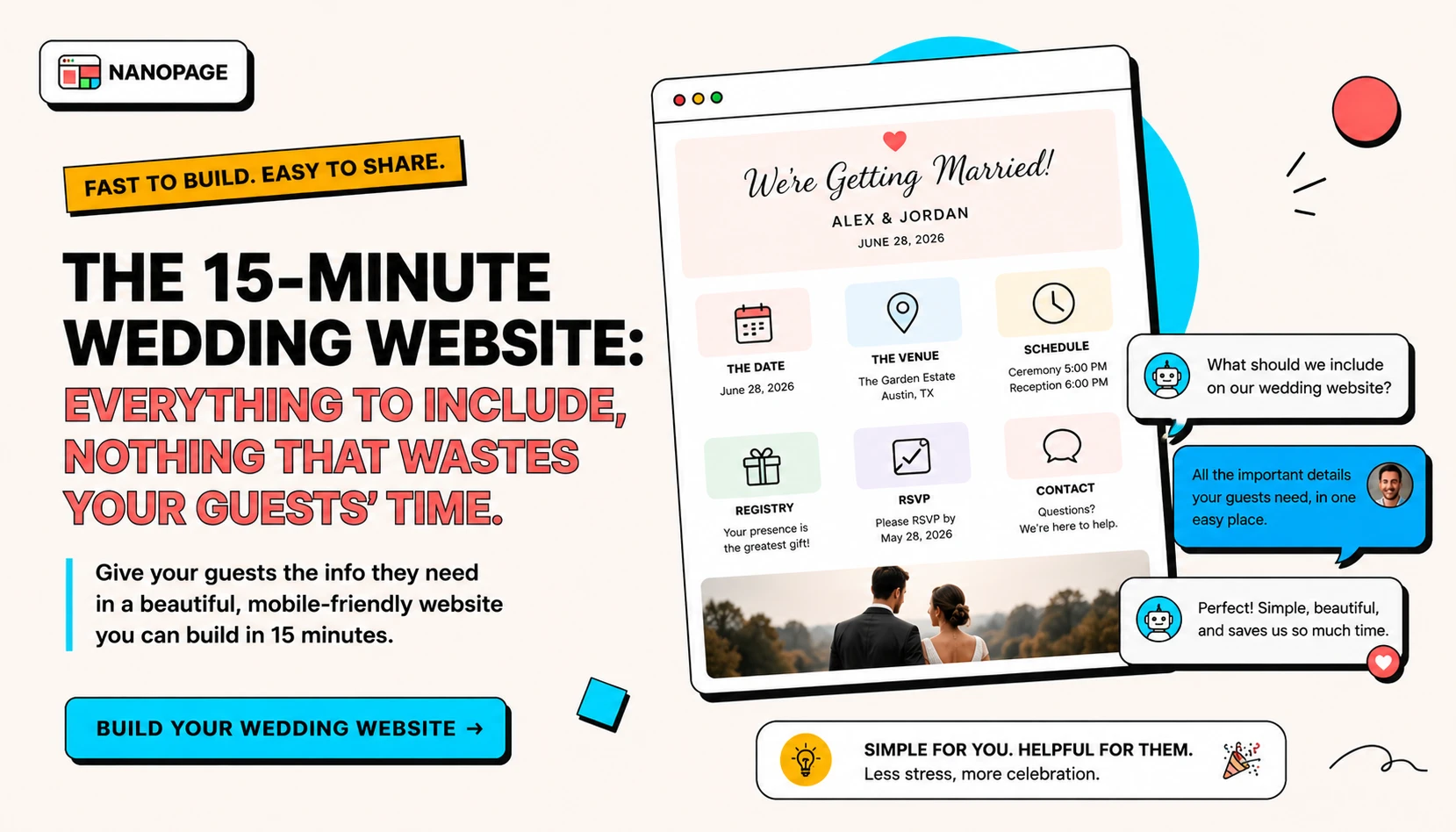
The 15-Minute Wedding Website: Everything to Include, Nothing That Wastes Your Guests' Time
A practical wedding website checklist: schedule, venue, dress code, RSVP, registry, travel, FAQ, and what to leave out. Build a clean wedding site in about 15 minutes.
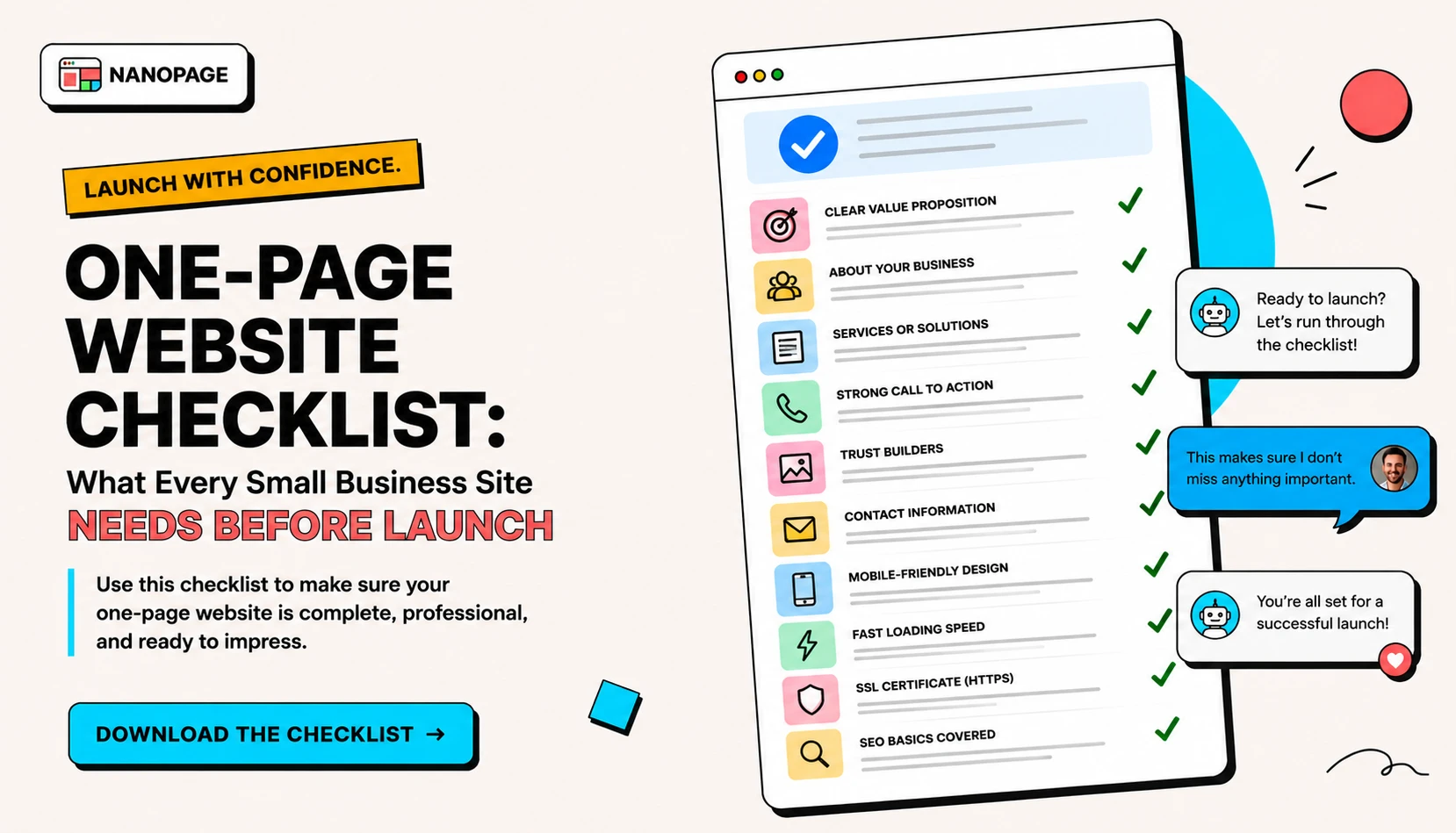
One-Page Website Checklist: What Every Small Business Site Needs Before Launch
A practical launch checklist for one-page small business websites: headline, services, pricing, photos, proof, calls to action, contact details, mobile checks, SEO basics, and updates.
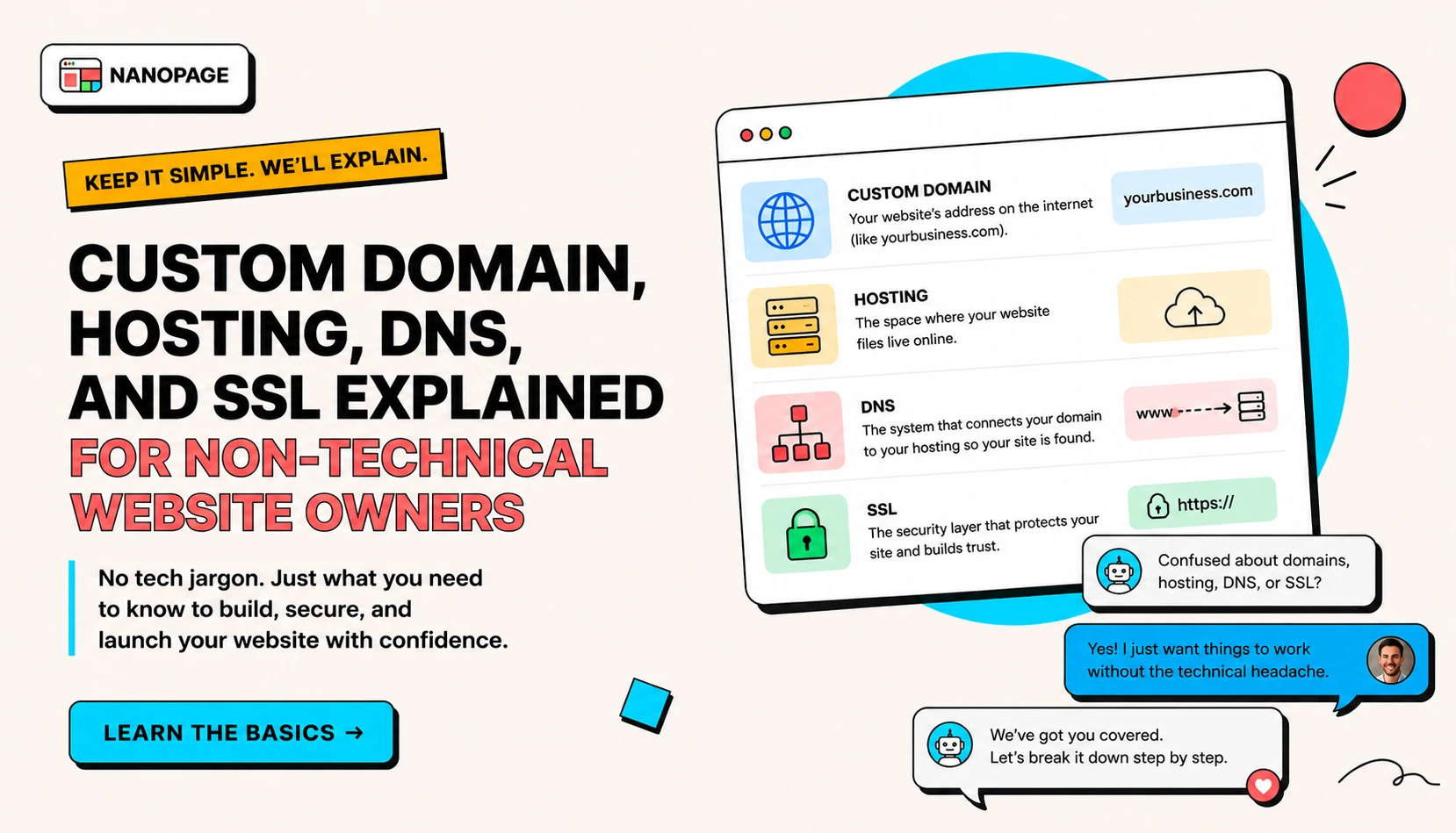
Custom Domain, Hosting, DNS, and SSL Explained for Non-Technical Website Owners
A simple explanation of domains, hosting, DNS records, A records, SSL, HTTPS, and how they fit together when connecting a custom domain to a website.
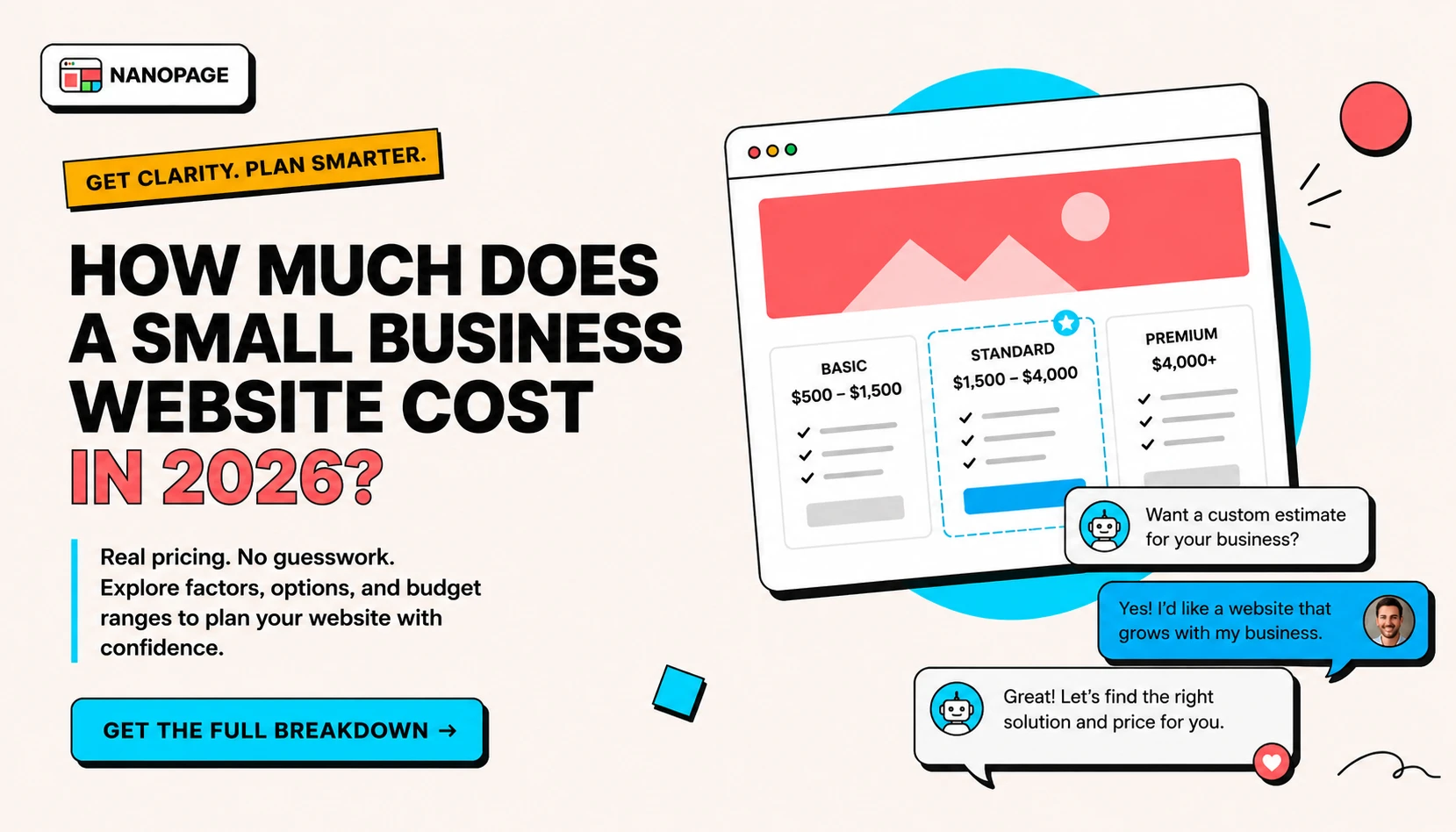
How Much Does a Small Business Website Cost in 2026?
A plain-English breakdown of small business website costs: agencies, freelancers, traditional site builders, AI website builders, domains, hosting, updates, and hidden costs.
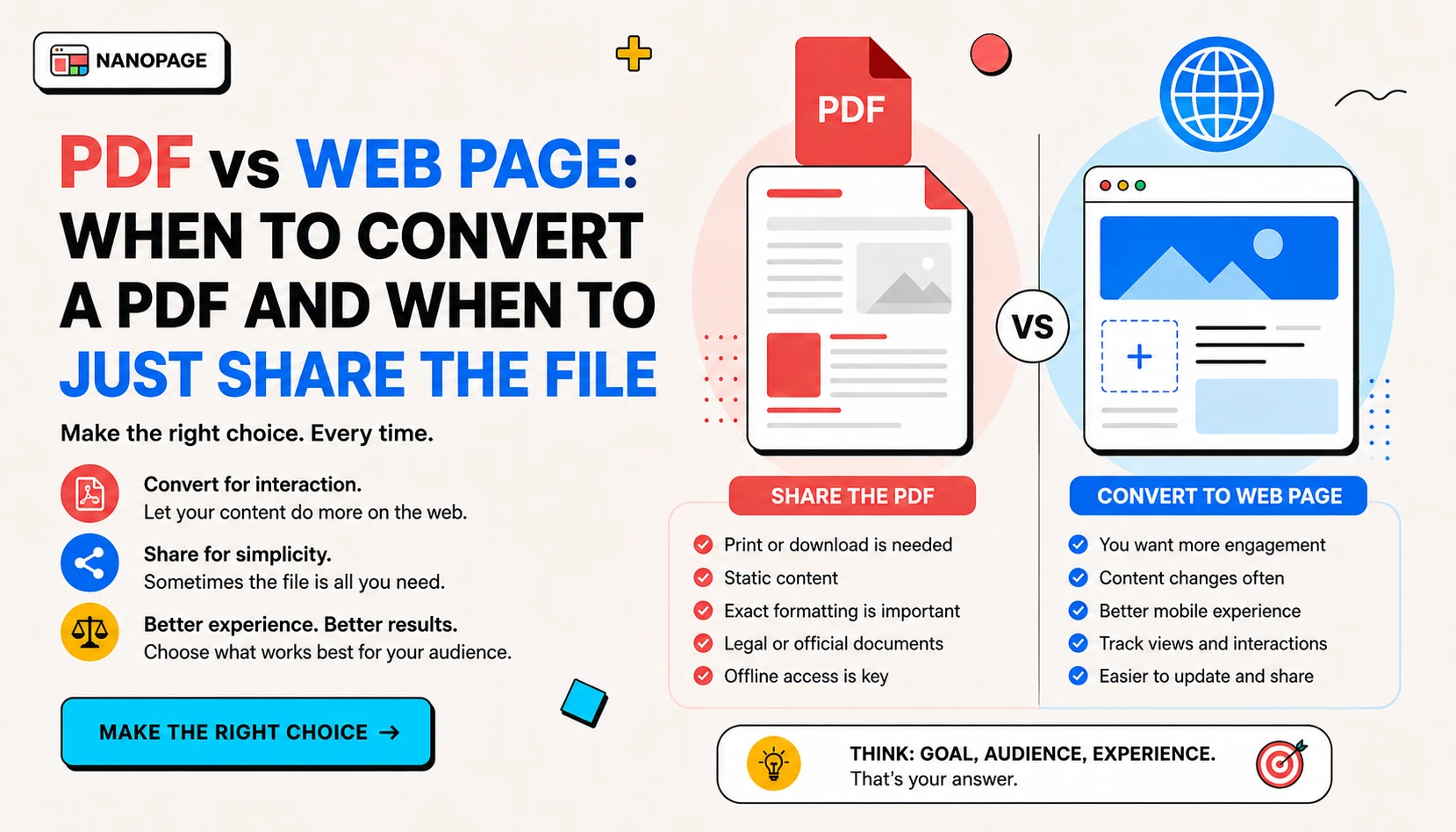
PDF vs Web Page: When to Convert a PDF and When to Just Share the File
A practical guide to deciding whether a PDF should become a web page, stay as a downloadable file, or get both.
What to Put in a Website Brief: 7 Copy-Paste Examples for AI Website Builders
A practical website brief template for AI website builders, with copy-paste examples for restaurants, real estate listings, portfolios, resumes, events, service businesses, and PDFs.
Ready to use
the material?
Bring a brief, a PDF, a resume, a menu, a listing, or a pile of photos. Nanopage turns it into a hosted website.